The full physics stack
Coriolis. Eötvös. Spindrift. Aerodynamic jump. Each one is a real correction shooters at the top end run. Zephyr runs all of them, every shot. Not buried in a fudge factor, not optional, not a paid upgrade.
Introducing Zephyr · pocket ballistic computer
A pocket-sized handheld ballistic computer with a built-in anemometer, the full physics stack (Coriolis, Eötvös, spindrift, aerodynamic jump, true-curve drag on G1 and G7), and days of battery life. For shooters considering a Kestrel who want a different shape of hardware around pro-grade physics. Weather-sealed, USB-C rechargeable, no phone, no cloud, no subscription.
Full
Physics stack
Coriolis, Eötvös, spindrift, aerodynamic jump, true-curve drag modeling on G1 and G7. Running today on the demo above. Try it.
Hundredsof hours
Field endurance
Hundreds of hours of practical field use per charge, with two-stage sleep that drops standby to micro-amps between shots. USB-C rechargeable from anything.
Byshooters
Made to use
Designed by people who actually work a rifle. Sunlight-readable display, glove-friendly buttons, weather-sealed housing. Reservations open while we finish the ergonomics pass. Your feedback shapes the production unit.
The problem
The math has been there for decades. The problem is everything around it. Dated screens that wash out at noon. Menus designed in the 90s. Devices tethered to a phone, or worse, a phone pretending to be a device. Batteries that die when the temperature drops. And price tags that assume you have an expense account.
Zephyr is a serious solver in a handheld that respects your time, your hands, and the conditions you actually shoot in.
Capabilities
Coriolis. Eötvös. Spindrift. Aerodynamic jump. Each one is a real correction shooters at the top end run. Zephyr runs all of them, every shot. Not buried in a fudge factor, not optional, not a paid upgrade.
G1 and G7 standards out of the box, plus up to five user-calibrated true-BC points across the velocity envelope, so the drag curve bends to match how your bullet actually flies. The same approach the elite solvers charge a subscription for.
Air temperature comes from an isolated probe, not a sensor warming up inside the housing. Pressure and humidity sample continuously. The solver advances air density along the trajectory, so the drag at apex matches the air the bullet is actually in, not the air at your boots.
Take the wind read, take the shot, see where it actually went. Zephyr back-calculates what the wind actually did and offers the correction, so the next call is informed by reality, not just by what the meter said.
Velocity changes with temperature. Zephyr knows. Sight in once, log a chrono read on a different day, and the live muzzle velocity follows the temperature. No more 50 fps surprises at first light.
Switching to a different load you haven't shot before? Take a few rounds at any known distance, and Zephyr captures the environment per shot and figures out where you actually need to be zeroed. No load development trip, no guesswork.
Built for the field
A solver is only as good as the device you can actually pull out of your pack at first light. Zephyr's hardware is engineered to live in the truck, ride in the pack, and be the part of your kit you stop thinking about.
Designed and assembled in America.
Practical field use sees the device sleeping between shots and waking instantly when you reach for it. Hundreds of hours of mixed-use endurance per charge. USB-C rechargeable from any phone charger, power bank, or vehicle port.
~30 hours of continuous always-on operation with power savings disabled.
Two-stage sleep with a peripheral FET cut drops standby draw to micro-amps. Throw it in the safe over the off-season, pick it up next year, take a shot.
Weather-sealed housing engineered to shrug off the conditions you actually shoot in: pouring rain, blowing snow, a brief plunge in a creek crossing. Drop-resistant chassis, glove-friendly buttons, no fragile knobs.
Everything happens on the device. Profiles, stages, calibration data, and shot log all live in on-device storage. No subscription, no telemetry, no internet required.
See it run
Every screen, every menu, every solver. The same code that ships on the device, running live on our server and streamed to your screen. Click around, try a long shot, sweep the wind slider. If something in the flow could be tighter, the reserve form has a feedback field that lands in our inbox.
Open the live demoLook under the hood
The same physics that runs on Zephyr, sitting on a plain web form. Type in your load, your atmosphere, your twist rate, whatever you want, and the full trajectory table updates live: drop, velocity, energy, Coriolis, spin drift. Flip individual effects on and off and watch exactly how each one bends the curve. Poke at the solver as much as you like before you commit to anything.
Open the algorithm playgroundSpecifications
Use cases
PRS, NRL, F-class, ELR. The disciplines where the wind call is the match. Zephyr's per-stage scenario builder lets you pre-load every target on a course, with target-specific range and angle, then step through them shot-by-shot. The solver's output is a single dial value plus a wind hold. Nothing else to do under time pressure.
Mountain hunts at altitudes the bench-zero never sees. Pre-dawn cold that drops MV by 50 fps. Long days where the last thing you want is a dead phone or a clunky menu. Zephyr's atmospheric correction, per-profile MV-temp slope, and field battery life are built around exactly these shots. The ones that don't get a second try.
The firmware is being hardened for institutional deployment: ruggedized housing options, expanded profile capacity, secure firmware signing, and Bluetooth integration paths for issued spotting kit. Partnerships welcomed. Get in touch via the contact link below.
How it's different
If you've shopped handheld ballistic computers, you've already seen the name that shows up in every search: Kestrel. It's the incumbent. It's also a dated product at a price that hasn't been justified in a decade: a monochrome LCD, AA batteries, a UI built before smartphones existed, and a ticket north of a grand once you bolt on the ballistics package.
Zephyr is a from-scratch handheld ballistic computer for shooters who like the form factor and want the modern equivalent: a color sunlight-readable display, a USB-C battery that charges from anything you already carry, the full physics stack on by default (Coriolis, spindrift, aerodynamic jump, true-curve drag on G1 and G7, no paid upgrades), Bluetooth on board for future accessories and an optional companion app, and a sub-$400 target price.
Kestrel column reflects publicly published Kestrel 5700X Elite specs. Kestrel is a trademark of Kestrel Instruments; this comparison is for clarity, not endorsement.
Where we are
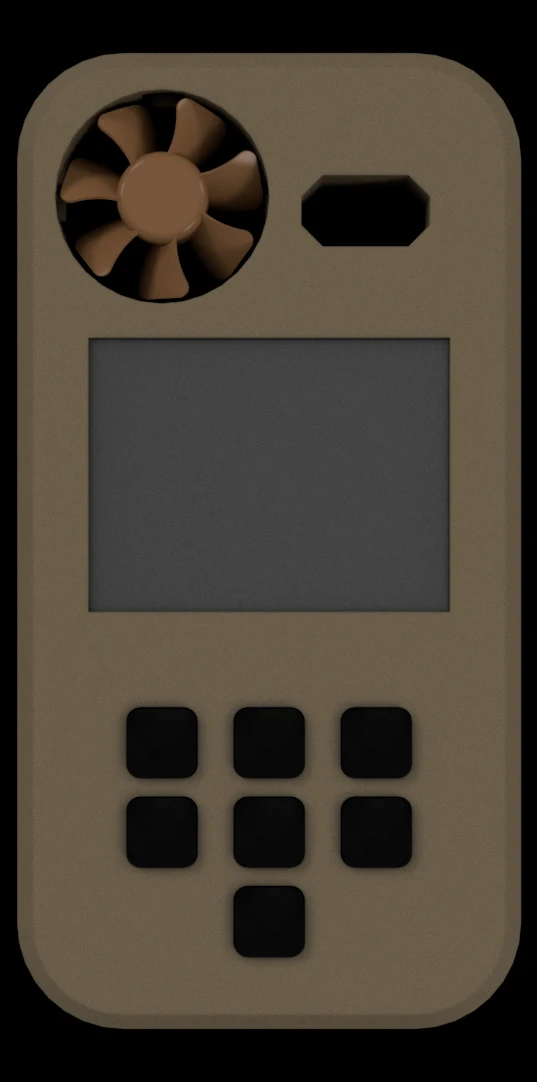
Custom PCB, sensor stack, anemometer assembly, display rotation, button geometry. The MK2 board is the working unit you see in the demo render. Final tooling locks after one more pass on case ergonomics.
The full physics stack, profile manager, scenario builder, zero calculator, sleep system, and OTA pipeline are all running. The solver is validated against published Applied Ballistics reference data. What you click in the live demo is the same code that ships.
Last pass on menu flow, footer hints, and a few button-mapping refinements before production. Reserve a unit; no payment required at this stage. Every form submission lands directly in the founder's inbox. Feedback from the demo genuinely shapes what ships.
Limited initial run for early reservation holders. Pricing and ship dates confirmed when manufacturing locks in.
The Bluetooth radio is already on the board. Future capability arrives as OTA firmware updates to existing devices, not as new hardware you have to buy.
Reserve · Feedback
Target price $349.99 final pricing set at production launch
The firmware is feature-complete and validated against the same reference data the elite solvers publish. The hardware is on its second board revision and works. What's left before launch is UI polish and a final ergonomic pass on the buttons and case. Small stuff, but the kind of thing that benefits from real-shooter feedback before the production run goes out.
No charge today. No spam. Email goes straight to the founder. Every submission comes through to a real inbox, every feature request and bug report gets a reply.
Want to reach us directly instead of using the form? Drop your address in the email field below and check the "Just want to talk" use-case option, and we'll reach out.
Frequently asked
We're finalizing the production-run cost and will publish a price the moment we open orders. Reserving doesn't lock you in. It just gets you the email first.
The first production run is targeted within ~2 months of order open. Reservations will be filled in the order they were submitted.
Same shape as the workflow you already use: capture a wind read, take the shot. Where Zephyr differs is the truing tool. Observe your impact, and the device back-calculates the wind that actually moved the bullet. Over a few shots the device learns the difference between what the meter reads at the bench and what the air is doing along the flight path. We don't claim to magically measure complex valley winds in real time; we claim to give you a tool that makes your wind calls measurably better, shot to shot.
Hundreds of hours of practical field use per charge. The device sleeps between shots and wakes instantly when you reach for it, so a typical hunt or match weekend doesn't come close to draining it.
If you keep it screen-on at full brightness with all sensors active and power savings disabled, you'll get around 30 hours of continuous always-on time. Deep-sleep runs for seasons; throw it in the safe and pick it back up next year. USB-C charging from any phone charger, power bank, or vehicle USB port.
Yes. WiFi is only used for optional OTA firmware updates, and is off by default. No telemetry, no cloud, no account. All profiles, stages, and calibrations live in on-device NVS storage.
Yes. Each profile supports up to 5 user-calibrated true-BC points across the velocity envelope. The solver interpolates between them by Mach number, so the drag the bullet sees at every point in flight matches what you've measured at the range.
Validated against published reference data and live chronograph drops well past 2000 yd. No solver replaces honest inputs (your velocity, your BC, your zero), but given honest inputs, Zephyr's outputs match the elite solvers. That's the point.
Set up the profile with whatever ammo info you have, take a few rounds at any distance you can measure, and Zephyr captures the environment per shot and back-solves the actual zero. Faster than a chrono, and works with factory ammo where the box specs lie.
Yes. Updates are optional, never automatic, never forced. Pick the latest, downgrade to a previous version, pin a release you trust. Whatever you want. Updates arrive over WiFi when you ask the device to check; never when you don't.
Yes, and that's not boilerplate. We've shipped features that started as customer messages within a week of getting them. Drop your suggestion in the reserve form's feedback field, or hit the contact link in the footer. We read every one.
The device is fully usable on its own, no phone required. Bluetooth is on the board and an optional companion app is on the roadmap for shooters who want one (profile sync, larger map views, that sort of thing) but it'll never be a dependency for using the Zephyr.
The firmware is closed-source. That's the IP that makes Zephyr what it is. The live demo on this site runs the actual firmware on our server, so you can evaluate every screen and every solver path before you commit. Source access is negotiable for institutional partners.